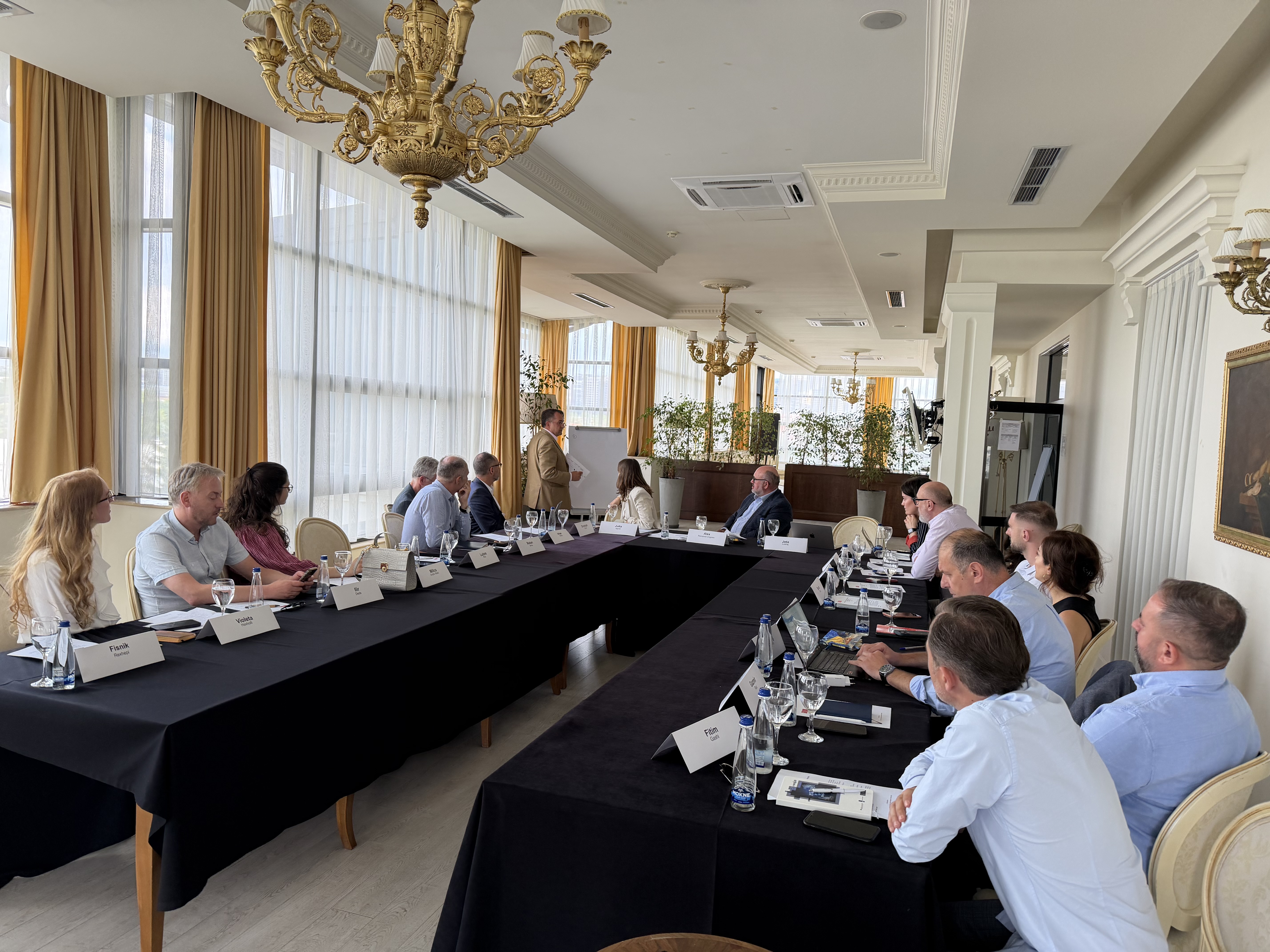
On July 6, 2026, the Council for Inclusive Governance (CIG), with the support of the Swiss Federal Department of Foreign Affairs and the Italian Ministry of Foreign Affairs and International Cooperation, convened a workshop in Pristina bringing together civil society representatives and policy experts to discuss issues underlying the interethnic relations in Kosovo. The discussion focused on how to create conditions for more constructive engagement between Kosovo Albanian and Kosovo Serb political representatives amid limited communication and persistent mistrust.
Although participants differed in their assessments of recent developments and the factors contributing to the current impasse, the discussion revealed broad convergence around several practical priorities that could help rebuild confidence and gradually create space for renewed political dialogue. These themes are reflected in the brief outline below.
Participants generally agreed that, despite several positive developments over the past two years, interethnic relations have seen little meaningful progress at the political level. The return of Kosovo Serb representatives to municipal institutions in the north and to the Kosovo Assembly, the peaceful transition of power following local elections, and the phased implementation of the Law on Foreigners were cited as examples demonstrating that pragmatic solutions remain possible when sufficient political will exists.
At the same time, participants noted that these developments have yet to produce tangible improvements in citizens’ everyday lives or more sustained political communication. While some observed that the current situation is less tense than during the 2020–2023 period, many argued that recent developments reflect recurring patterns rather than a genuine shift in interethnic relations. Although community-level interaction and local cooperation continue in many areas, meaningful engagement between political representatives remains limited.
Participants also acknowledged that Kosovo's ongoing political uncertainty has narrowed the space for dialogue. They emphasized, however, that this should not prevent continued discussion on practical priorities and shared challenges. Such discussions could help ensure, once political conditions become more conducive, that a clearer agenda for renewed engagement is already in place.
This brief report summarizes the principal themes that emerged during the meeting which was conducted under the Chatham House Rule. The report was prepared by Jeta Loshaj, CIG’s Senior Associate.
Advancing Political Interethnic Dialogue in Kosovo