Bosnia and Herzegovina (BiH) failed to seize the opportunity to open accession negotiations with the EU in early December 2025. Two key laws, on the Courts of Bosnia and Herzegovina and on the High Judicial and Prosecutorial Council, have still not been adopted, and the chief negotiator for EU accession negotiations has not yet been appointed.
At the same time, the internal political crisis, which began with the adoption of controversial laws on reclaiming competences previously transferred to the central level by the National Assembly of Republika Srpska (RS) in February 2025, is still ongoing. Two rounds of extraordinary elections for the President of RS in November 2025 and February 2026 (repeat of elections in some electoral posts due to irregularities) further increased tensions. It is therefore very likely that opportunities for reforms will remain limited, particularly in light of the upcoming general elections in BiH scheduled for October.
Meanwhile, persistent rumors about reforms in the European Union (EU) are circulating in the context of a potential end to the war in Ukraine and the prospect of EU membership for that country. A reform of the EU accession methodology is reportedly being considered which, in addition to Ukraine, could also be offered to other candidates, including those in the Western Balkans.
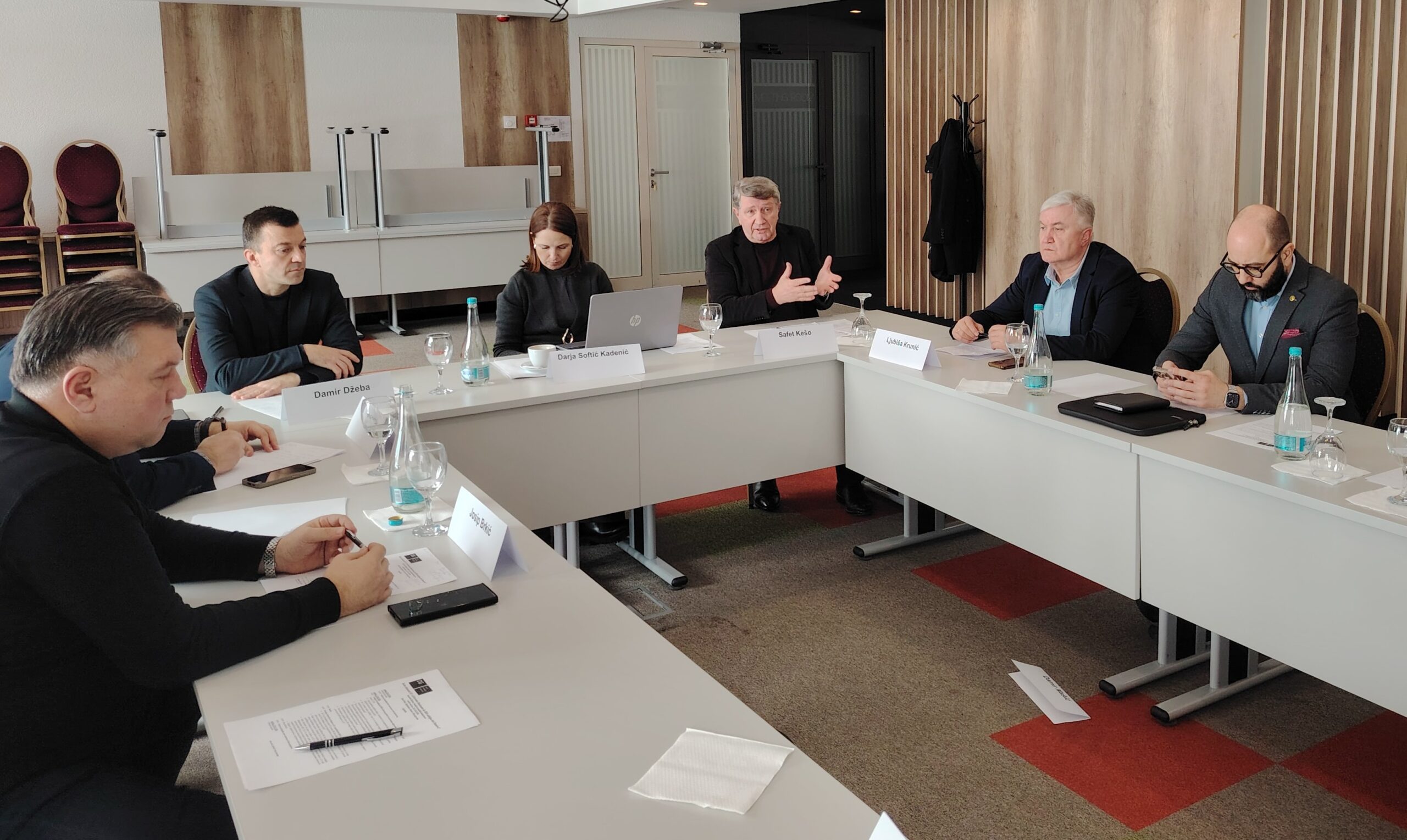
In this context, the Council for Inclusive Governance (CIG) organized on February 21, 2026 in Bjelašnica near Sarajevo, another session of dialogue among officials from the main political parties in BiH. Previous meetings organized by CIG, both within BiH and in regional formats, concluded that the existing negotiation process is already extremely challenging for a country with the internal complexity of BiH, and that it might be necessary to present representatives of the most important EU member states with a vision for a modified approach. In other words, the most influential EU states would like to see a coherent joint initiative and vision coming from political actors in BiH, rather than the blockages and misunderstandings that have characterized the process so far. The aim of the meeting was therefore to discuss the current situation regarding BiH’s EU integration, internal challenges, and the country’s potential response to a possible “geopolitical” offer that may materialize in the coming months.
Several conclusions were formulated during the meeting and are included in this report. The elements of the report and its conclusions do not necessarily reflect consensus but rather represent the most critical aspects of the discussion. The meeting was held under the Chatham House Rule, and none of the content or conclusions presented can be directly attributed to any participant. The meeting is part of a project supported by the Robert Bosch Foundation. The report was prepared by Igor Novakovi?, Senior Associate at CIG, and CIG assumes sole responsibility for its content.
European Path of BiH: Credibility and Political Will ENG
Evropski put BiH: kredibilitet i politicka volja BHS